MyBatis 插件使用-自定义简单的分页插件
@
作为一个优秀的框架, 其除了要解决大部分的流程之外, 还需要提供给使用者能够自定义的能力。 MyBatis 有缓存, 有插件接口等。我们可以通过自定义插件的方式来对 MyBatis 进行使用上的扩展。
以一个简单的 mysql 分页插件为例, 插件的使用包含以下步骤:
1 分页参数的传递
分页参数就是 offset 和 limit。 可以使用 RowBounds 来进行传递, 但是这样需要对原有的方法进行修改。 因此, 本例子通过 ThreadLocal 进行无痛觉的传递。
/**
 * @author homejim
 */
public class PageUtil {
    private static final ThreadLocal<Page> LOCAL_PAGE = new ThreadLocal<Page>();

    public static void setPagingParam(int offset, int limit) {
        Page page = new Page(offset, limit);
        LOCAL_PAGE.set(page);
    }

    public static void removePagingParam() {
        LOCAL_PAGE.remove();
    }

    public static Page getPaingParam() {
        return LOCAL_PAGE.get();
    }

}
在实际的使用过程中, 用户只需要再调用之前使用 PageUtil#setPagingParam 方法来进行分页参数的传递即可。 后续无需进行处理。
2 实现 Interceptor 接口
2.1 Interceptor 接口说明
先看看拦截器的接口。
/**
 * 拦截器接口
 *
 * @author Clinton Begin
 */
public interface Interceptor {

  /**
   * 执行拦截逻辑的方法
   *
   * @param invocation 调用信息
   * @return 调用结果
   * @throws Throwable 异常
   */
  Object intercept(Invocation invocation) throws Throwable;

  /**
   * 代理类
   *
   * @param target
   * @return
   */
  Object plugin(Object target);

  /**
   * 根据配置来初始化 Interceptor 方法
   * @param properties
   */
  void setProperties(Properties properties);

}
因此, 在实际的使用中。我们要覆盖这几个方法。
2.1 注解说明
在 mybatis 中, 可以拦截的方法包括
- Executor (update, query, flushStatements, commit, rollback, getTransaction, close, isClosed)
- ParameterHandler (getParameterObject, setParameters)
- ResultSetHandler (handleResultSets, handleOutputParameters)
- StatementHandler (prepare, parameterize, batch, update, query)
但是接口只有一个 Interceptor , 因此, 需要使用注解 @Intercepts 和 @Signature 来指定拦截的方法。
@Documented
@Retention(RetentionPolicy.RUNTIME)
@Target({ElementType.TYPE})
public @interface Intercepts {
    Signature[] value();
}
Intercepts 注解中是 Signature 注解的数组。
/**
 * 方法签名信息
 *
 * @author Clinton Begin
 */
@Documented
@Retention(RetentionPolicy.RUNTIME)
@Target({})
public @interface Signature {
  /**
   * 需要拦截的类型
   *
   * @return
   */
  Class<?> type();

  /**
   * 需要拦截的方法
   * @return
   */
  String method();

  /**
   * 被拦截方法的参数列表
   *
   * @return
   */
  Class<?>[] args();
}
2.3 实现分页接口 PageInterceptor
/**
 * 分页插件
 *
 * @author homejim
 */
@Intercepts({
        @Signature(
                type = Executor.class,
                method = "query",
                args = {MappedStatement.class, Object.class, RowBounds.class, ResultHandler.class}
        )
})
@Slf4j
public class PageInterceptor implements Interceptor {

    private static int MAPPEDSTATEMENT_INDEX = 0;

    private static int PARAMETER_INDEX = 1;

    private static int ROWBOUNDS_INDEX = 2;

    @Override
    public Object intercept(Invocation invocation) throws Throwable {

        // 从 Invocation 中获取参数
        final Object[] queryArgs = invocation.getArgs();
        final MappedStatement ms = (MappedStatement) queryArgs[MAPPEDSTATEMENT_INDEX];
        final Object parameter = queryArgs[PARAMETER_INDEX];

        //  获取分页参数
        Page paingParam = PageUtil.getPaingParam();
        if (paingParam != null) {

            // 构造新的 sql, select xxx from xxx where yyy limit offset,limit
            final BoundSql boundSql = ms.getBoundSql(parameter);
            String pagingSql = getPagingSql(boundSql.getSql(), paingParam.getOffset(), paingParam.getLimit());

            // 设置新的 MappedStatement
            BoundSql newBoundSql = new BoundSql(ms.getConfiguration(), pagingSql,
                    boundSql.getParameterMappings(), boundSql.getParameterObject());
            MappedStatement mappedStatement = newMappedStatement(ms, newBoundSql);
            queryArgs[MAPPEDSTATEMENT_INDEX] = mappedStatement;

            // 重置 RowBound
            queryArgs[ROWBOUNDS_INDEX] = new RowBounds(RowBounds.NO_ROW_OFFSET, RowBounds.NO_ROW_LIMIT);
        }
        Object result = invocation.proceed();
        PageUtil.removePagingParam();
        return result;
    }

    @Override
    public Object plugin(Object o) {
        return Plugin.wrap(o, this);
    }

    @Override
    public void setProperties(Properties properties) {

    }

    /**
     * 创建 MappedStatement
     * @param ms
     * @param newBoundSql
     * @return
     */
    private MappedStatement newMappedStatement(MappedStatement ms, BoundSql newBoundSql) {
        MappedStatement.Builder builder = new MappedStatement.Builder(ms.getConfiguration(), ms.getId(),
                new BoundSqlSqlSource(newBoundSql), ms.getSqlCommandType());
        builder.keyColumn(delimitedArrayToString(ms.getKeyColumns()));
        builder.keyGenerator(ms.getKeyGenerator());
        builder.keyProperty(delimitedArrayToString(ms.getKeyProperties()));
        builder.lang(ms.getLang());
        builder.resource(ms.getResource());
        builder.parameterMap(ms.getParameterMap());
        builder.resultMaps(ms.getResultMaps());
        builder.resultOrdered(ms.isResultOrdered());
        builder.resultSets(delimitedArrayToString(ms.getResultSets()));
        builder.resultSetType(ms.getResultSetType());
        builder.timeout(ms.getTimeout());
        builder.statementType(ms.getStatementType());
        builder.useCache(ms.isUseCache());
        builder.cache(ms.getCache());
        builder.databaseId(ms.getDatabaseId());
        builder.fetchSize(ms.getFetchSize());
        builder.flushCacheRequired(ms.isFlushCacheRequired());
        return builder.build();
    }

    public String getPagingSql(String sql, int offset, int limit) {
        StringBuilder result = new StringBuilder(sql.length() + 100);
        result.append(sql).append(" limit ");

        if (offset > 0) {
            result.append(offset).append(",").append(limit);
        }else{
            result.append(limit);
        }
        return result.toString();
    }

    public String delimitedArrayToString(String[] array) {

        if (array == null || array.length == 0) {
            return "";
        }
        Joiner joiner = Joiner.on(",");
        return joiner.join(array);
    }
}
根据前面注解的讲解, 我们要拦截的是 Executor 类中以下方法
<E> List<E> query(MappedStatement ms, Object parameter, RowBounds rowBounds, ResultHandler resultHandler) throws SQLException;
拦截后
MappedStatement
3. 更改配置
在以上的步骤之后, mybatis 还是不知道我们都有哪些接口, 以及哪些接口需要用。 因此, 需要再配置中进行说明。
在 mybatis-config.xml 文件中, 加入以下的配置
<plugins>
    <plugin interceptor="com.homejim.mybatis.plugin.PageInterceptor">
    </plugin>
</plugins>
4 测试
@Test
    public void testSelectList() {
        SqlSession sqlSession = null;
        try {
            sqlSession = sqlSessionFactory.openSession();
            PageUtil.setPagingParam(1, 2);
            List<Student> students = sqlSession.selectList("selectAll");
            for (int i = 0; i < students.size(); i++) {
                System.out.println(students.get(i));
            }

            List<Student> students2 = sqlSession.selectList("selectAll");
            for (int i = 0; i < students2.size(); i++) {
                System.out.println(students2.get(i));
            }
        } catch (Exception e) {
            e.printStackTrace();
        } finally {
            if (sqlSession != null) {
                sqlSession.close();
            }
        }
    }
其中, 第一个查询使用了分页, 第二个没有使用。 执行结果如下
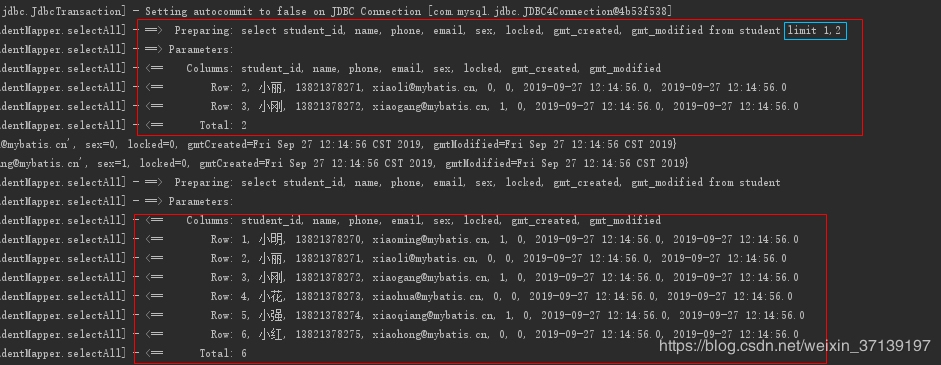
第一个查询使用了分页, 因此有 limit , 第二个查询没有, 因此查询出了所有的结果。
更多使用, 访问我的GitHub 项目
正文到此结束
- 本文标签: https sqlsession NSA ResultSet value mysql http sql executor HTML 分页 git SqlSessionFactory IDE Statement key src cat cache App mybatis tab Action UI session XML build tar StatementHandler CTO tk 插件 测试 Property 配置 id Select final plugin GitHub 缓存 list update ACE map IO Document 参数
- 版权声明: 本文为互联网转载文章,出处已在文章中说明(部分除外)。如果侵权,请联系本站长删除,谢谢。
- 本文海报: 生成海报一 生成海报二
热门推荐




相关文章



Loading...