自定义ApiBoot Logging链路以及单元ID生成策略
ApiBoot Logging 会为每一个请求都对应创建链路编号( TraceID )以及单元编号( SpanID ),用于归类每一次请求日志,通过一个链路下日志单元的 Parent SpanID 可以进行上下级关系的梳理。
前文回顾
-
使用ApiBoot Logging进行统一管理请求日志
-
将ApiBoot Logging采集的日志上报到Admin
了解链路编号的传递方式
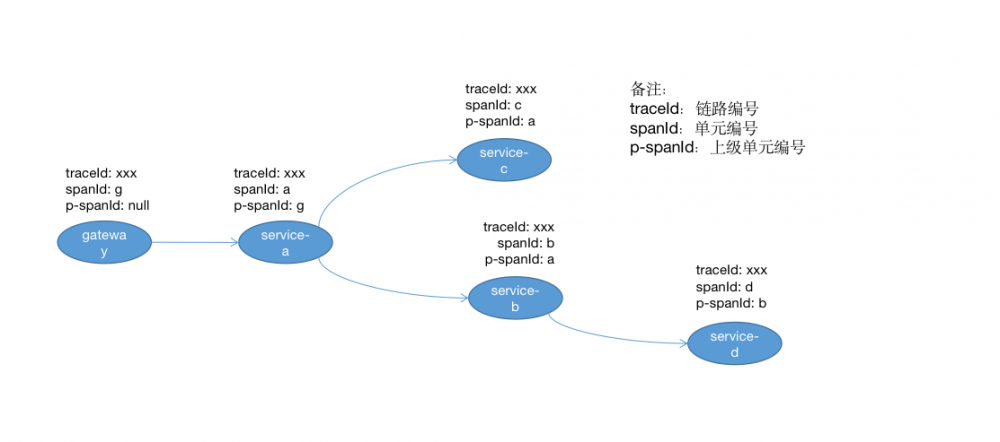
在每一次请求中链路编号( traceId )、单元编号 (spanId) 都是通过 HttpHeader 的方式进行传递,日志的起始位置会主动生成 traceId 、 spanId ,而起始位置的 Parent SpanId 则是不存在的,值为 null 。
这样每次通过 restTemplate 、 Openfeign 的形式访问其他服务的接口时,就会 携带起始位置生成的 traceId 、 spanId 到下一个服务单元 。
默认编号
ApiBoot Logging 内部提供了默认的编号格式,默认为通用格式,没有区分性,无法从编号上进行区分日志的具体归类。
默认的链路编号
ApiBoot Logging 内部通过集成 minbox-logging 日志组件来完成日志的采集等基本功能,每一次生成采集的日志时都会通过 LoggingTraceGenerator 接口进行生成链路编号( TraceID ),该接口源码如下所示:
/**
 * ApiBoot Logging Tracer
 * Create new traceId
 *
 * @author:恒宇少年 - 于起宇
 * <p>
 * DateTime:2019-07-10 17:01
 * Blog:http://blog.yuqiyu.com
 * WebSite:http://www.jianshu.com/u/092df3f77bca
 * Gitee:https://gitee.com/hengboy
 * GitHub:https://github.com/hengboy
 */
public interface LoggingTraceGenerator {
    /**
     * create new traceId
     *
     * @return traceId
     * @throws MinBoxLoggingException exception
     */
    String createTraceId() throws MinBoxLoggingException;

}
复制代码
ApiBoot Logging 默认的链路编号( TraceID )采用的是 UUID随机字符串 的方式生成的,内部实现是通过 LoggingTraceGenerator 接口的默认实现类 LoggingDefaultTraceGenerator 进行生成,生成类源码如下所示:
/**
 * ApiBoot Logging Tracer Default Support Instance
 *
 * @author:恒宇少年 - 于起宇
 * <p>
 * DateTime:2019-07-10 17:28
 * Blog:http://blog.yuqiyu.com
 * WebSite:http://www.jianshu.com/u/092df3f77bca
 * Gitee:https://gitee.com/hengboy
 * GitHub:https://github.com/hengboy
 */
public class LoggingDefaultTraceGenerator implements LoggingTraceGenerator {
    /**
     * Use UUID as the default traceId
     *
     * @return traceId
     * @throws MinBoxLoggingException Exception
     */
    @Override
    public String createTraceId() throws MinBoxLoggingException {
        return UUID.randomUUID().toString();
    }
}

复制代码
默认的单元编号
单元编号 是一条链路下经过的每一个业务单元的唯一标识,在 SpringCloud 微服务的场景下每发起一个请求内部通过 Openfeign 可能会经过多个 服务 ,这样每经过的一个服务称之为单元,而当前这条链路下的单元唯一标识字符串就称为 单元编号 。
minbox-logging 提供了生成 单元编号 的接口 LoggingSpanGenerator ,源码如下所示:
/**
 * ApiBoot Logging Span
 * Create new spanId
 *
 * @author:恒宇少年 - 于起宇
 * <p>
 * DateTime:2019-07-10 17:02
 * Blog:http://blog.yuqiyu.com
 * WebSite:http://www.jianshu.com/u/092df3f77bca
 * Gitee:https://gitee.com/hengboy
 * GitHub:https://github.com/hengboy
 */
public interface LoggingSpanGenerator {
    /**
     * create new spanId
     *
     * @return span id
     * @throws MinBoxLoggingException exception
     */
    String createSpanId() throws MinBoxLoggingException;
}
复制代码
spanId 默认采用的跟 traceId 生成方式一致,都是 UUID 随机字符串, minbox-logging 提供了 LoggingSpanGenerator 接口默认的实现 LoggingDefaultSpanGenerator ,源码如下所示:
/**
 * ApiBoot Logging Default Span
 * Use By Create New SpanId
 *
 * @author:恒宇少年 - 于起宇
 * <p>
 * DateTime:2019-07-15 17:24
 * Blog:http://blog.yuqiyu.com
 * WebSite:http://www.jianshu.com/u/092df3f77bca
 * Gitee:https://gitee.com/hengboy
 * GitHub:https://github.com/hengboy
 */
public class LoggingDefaultSpanGenerator implements LoggingSpanGenerator {
    /**
     * Create New SpanId
     *
     * @return SpanId
     * @throws MinBoxLoggingException Exception
     */
    @Override
    public String createSpanId() throws MinBoxLoggingException {
        return UUID.randomUUID().toString();
    }
}
复制代码
自定义编号
我们可以根据自己的业务进行自定义 traceId 、 spanId ,可以加入一些自己业务的元素,只需要提供 minbox-logging 提供的生成 traceId 的接口 LoggingTraceGenerator 、生成 spanId 的接口 LoggingSpanGenerator 对应的实现类,并将实现类交给 LoggingFaceBean 管理即可。
自定义链路编号
/**
 * 自定义traceId生成策略
 *
 * @author 恒宇少年
 */
public class CustomTraceIdGenerator implements LoggingTraceGenerator {
    /**
     * 链路编号前缀
     */
    private static final String TRACE_ID_PREFIX = "local";

    @Override
    public String createTraceId() throws MinBoxLoggingException {
        return TRACE_ID_PREFIX + UUID.randomUUID().toString().hashCode();
    }
}
复制代码
我们创建名为 CustomTraceIdGenerator 的类并实现 LoggingTraceGenerator 接口,实现 createTraceId() 方法的返回值根据 local- 作为前缀,拼接 UUID 随机字符串的 hashCode 值作为后缀。
自定义单元编号
/**
 * 自定义单元编号生成策略
 *
 * @author 恒宇少年
 */
public class CustomSpanIdGenerator implements LoggingSpanGenerator {
    /**
     * 单元编号前缀
     */
    private static final String SPAN_ID_PREFIX = "group";

    @Override
    public String createSpanId() throws MinBoxLoggingException {
        return SPAN_ID_PREFIX + UUID.randomUUID().toString().hashCode();
    }
}
复制代码
我们创建名为 CustomSpanIdGenerator 的类并实现 LoggingSpanGenerator 接口,在 createSpanId() 方法的返回值根据 group- 作为前缀,使用 UUID 随机字符串的 hashCode 值作为后缀。
在上面我们已经创建了自定义 traceId 以及 spanId 的实现类,我们需要将实现类的实例交给 LoggingFactoryBean 管理,这样我们才可以实现自定义编号。
LoggingFactoryBeanCustomizer
ApiBoot Logging 提供了一个自定义设置 LoggingFactoryBean 的接口 LoggingFactoryBeanCustomizer ,通过该接口可以修改 LoggingFactoryBean 内允许修改的任意值。
我们创建名为 CustomCreateTraceAndSpanId 类并实现 LoggingFactoryBeanCustomizer 接口,源码如下所示:
/**
 * 自定义创建链路以及单元编号
 *
 * @author 恒宇少年
 * @see LoggingFactoryBeanCustomizer
 * @see LoggingFactoryBean
 * @see org.minbox.framework.logging.client.tracer.LoggingTraceGenerator
 * @see org.minbox.framework.logging.client.span.LoggingSpanGenerator
 */
@Component
public class CustomCreateTraceAndSpanId implements LoggingFactoryBeanCustomizer {
    /**
     * {@link CustomTraceIdGenerator} 自定义链路编号生成策略
     * {@link CustomSpanIdGenerator} 自定义单元编号生成策略
     *
     * @param factoryBean {@link LoggingFactoryBean}
     */
    @Override
    public void customize(LoggingFactoryBean factoryBean) {
        CustomTraceIdGenerator traceIdGenerator = new CustomTraceIdGenerator();
        factoryBean.setTraceGenerator(traceIdGenerator);

        CustomSpanIdGenerator spanIdGenerator = new CustomSpanIdGenerator();
        factoryBean.setSpanGenerator(spanIdGenerator);
    }
}

复制代码
customize 这种设计方式是在 SpringBoot 中比较常见的, ApiBoot 也沿用了这种设计方式, customize() 方法提供了 LoggingFactoryBean 对象实例作为参数,我们可以直接通过 setXxx 方法进行修改内定义的默认配置。
通过 facetory.setTraceGenerator 方法可以修改默认的 traceId 生成策略。
通过 facetory.setSpanGenerator 方法可以修改默认的 spanId 生成策略。
测试
启动项目后我们来查看控制台打印的日志内容,确认是否修改成功。
{
	"endTime":1571711067664,
	"httpStatus":200,
	"requestBody":"",
	"requestHeaders":{
		"accept":"*/*",
		"host":"localhost:8080",
		"user-agent":"curl/7.64.1"
	},
	"requestIp":"0:0:0:0:0:0:0:1",
	"requestMethod":"GET",
	"requestParam":"{}",
	"requestUri":"/index",
	"responseBody":"this is index.",
	"responseHeaders":{},
	"serviceId":"apiboot-custom-logging-traceid",
	"serviceIp":"127.0.0.1",
	"servicePort":"8080",
	"spanId":"group-1780993769",
	"startTime":1571711067643,
	"timeConsuming":21,
	"traceId":"local1111437283"
}
复制代码
traceId 、 spanId 已经修改成我们自定义的编号生成策略方式。
敲黑板划重点
本章节主要是讲到了如何自定义 traceId 以及 spanId ,我们可以通过 LoggingFactoryBeanCustomizer 对 LoggingFactoryBean 对象进行深度的自定义配置,有关 ApiBoot Logging 使用的正确姿势还有很多,敬请期待。
请结合文中前文回顾部分进行编写测试。 作者个人 博客 使用开源框架 ApiBoot 助你成为Api接口服务架构师
正文到此结束
热门推荐




相关文章



Loading...